Ethereum Price Outlook: Can ETH Break $2,800?
ETH’s October Pullback After a Strong Q3
ETH climbed over 70% in Q3, with all April losses completely erased. However, the token has retreated more than 13% YTD.
Since early October, ETH has slipped nearly 5%. However, we believe that this could be a routine pullback.
BlackRock Leads Spot Ethereum ETF Outflows
The current highlight is capital outflows from spot ETH ETFs. On October 6, investors withdrew $202 mn from ETFs, the largest amount in recent weeks.
The entire outflow was attributed to BlackRock, and this is partly a positive factor, suggesting no market-wide exodus from ETFs.
MetaMask Validator Exits and ETH Staking Demand
Crypto experts attributed the move to an infrastructure incident at MetaMask.
On September 30, the company disclosed the incident and said it began to exit ETH validators as a precaution.
Estimates showed that MetaMask Staking validators holding about 523,000 ETH had left or entered the ETH exit queue, although this information was not confirmed.
Meanwhile, there are roughly 1.5 mn ETH queued up for staking, confirming long-term interest in the network.
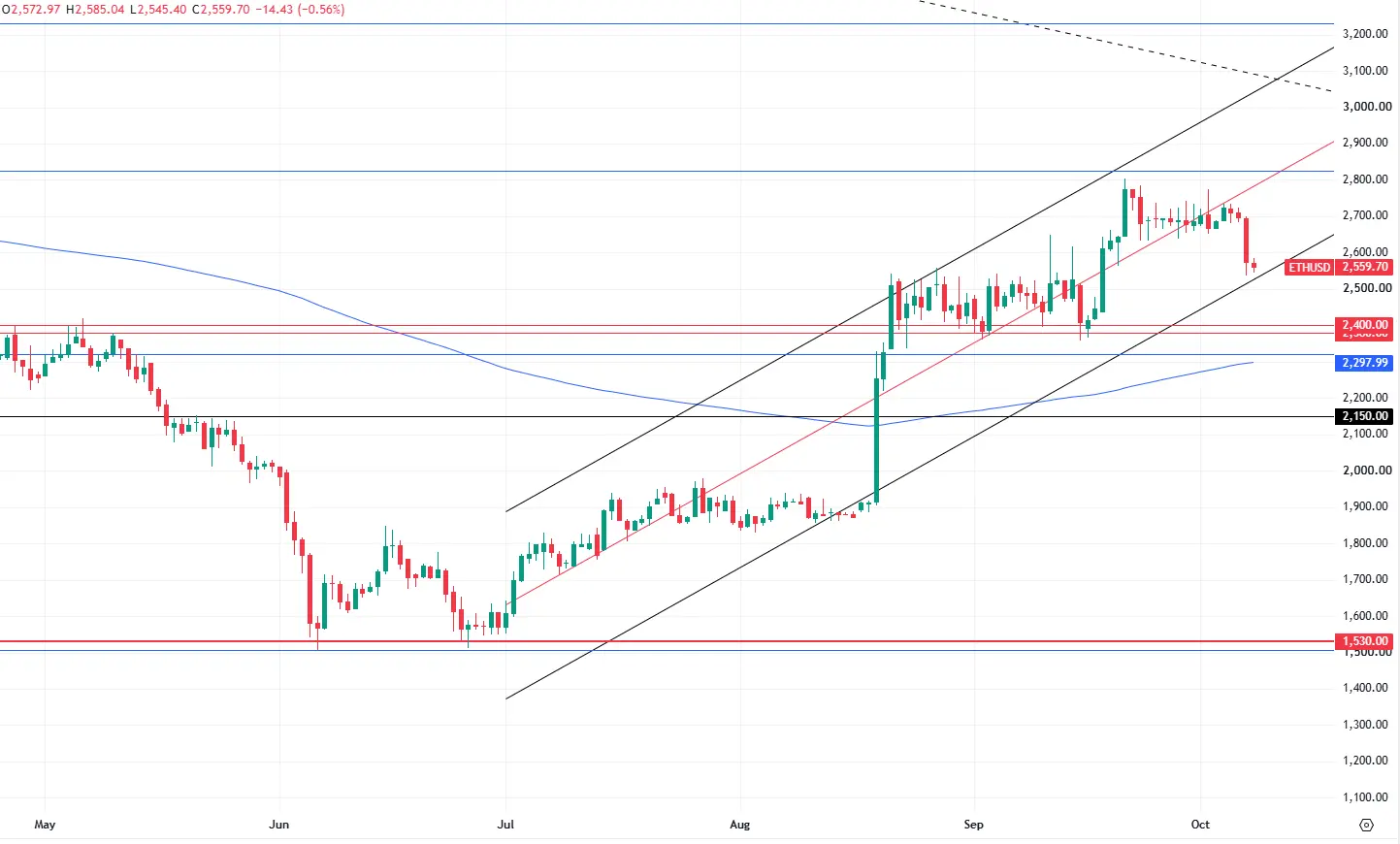
Ethereum’s Key Resistance: $2,800–2,825
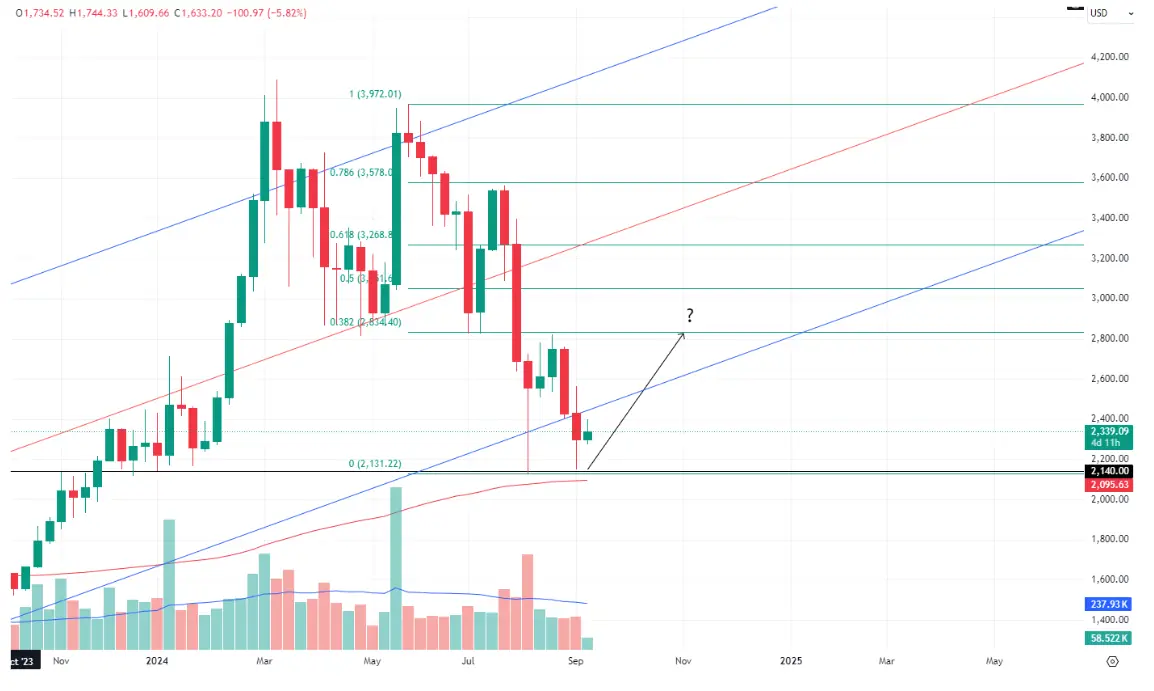
From a technical standpoint, the one-month chart shows that the token breached the 23.6% Fibonacci retracement level at $2,320 in July to September, nearing 38.2%, the next Fibonacci retracement line at $2,824.
The bulls failed to push up the token to that point, with a reversal happening near $2,800, so this mark should be watched.
According to the one-week chart, the 200-DMA is moving sideways, hovering around $2,470. As a result, it is too soon to speak about any V-shaped reversal.
In the medium and long term, a shift in the trend should be confirmed by a breakout of the $2,800-2,825 range and a move above the 38.2% retracement level.
If this scenario materializes, we could see the token move toward $3,230. In our view, that scenario looks realistic.
In the short term, we believe that ETH holds stronger upside than downside potential.
The token is trading near the lower bound of its regression channel and the recently breached local resistance at $2,500.