Bitcoin Slides Below $60K as Reserve Bill Looms
Bitcoin Extends Q1 Losses as June Selloff Deepens
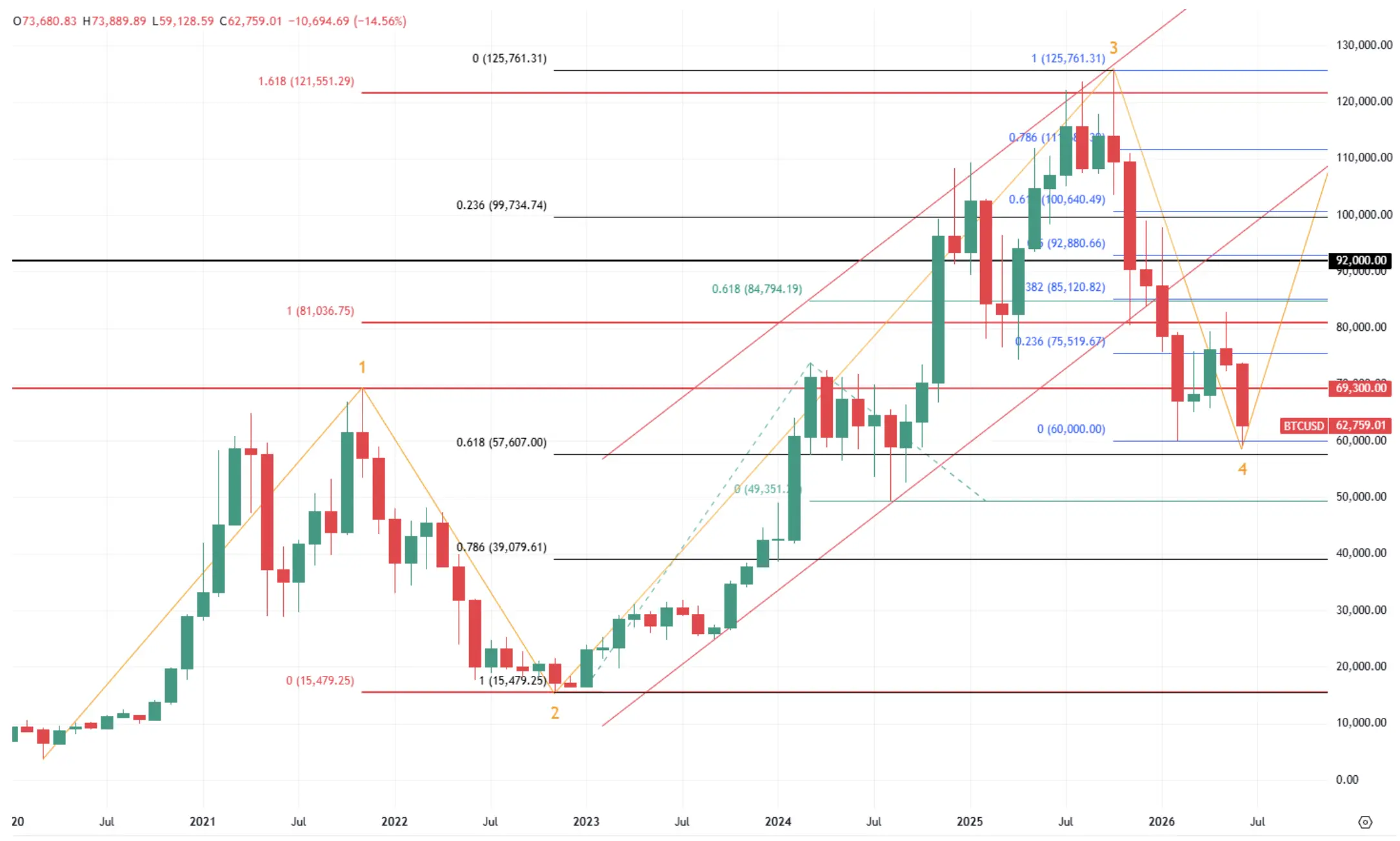
Bitcoin closed Q1 2026 22% lower, extending the downtrend. Early in Q2, signs of a rebound cropped up as the bulls jacked up the price nearly 12% through April.
In May, the price action momentarily tested levels near $82.8K, before reversing and selling off again.
The downturn has picked up momentum in June, with the token off 15% MTD after briefly breaking below $60K.
ARMA Bill Offers Long-Term Strategic Reserve Tailwind
In last month’s key headline, the American Reserve Modernization Act (ARMA) – a draft bill seeking to formally establish a strategic Bitcoin reserve under the auspices of the US Treasury – was submitted to the House of Representatives.
In line with the proposal, Bitcoin should be held for a minimum of 20 years and could only be sold for the purpose of reducing the US sovereign debt.
The avowed objective is to build up a reserve encompassing roughly 5% of total global Bitcoin supply.
Long term, this could generate a meaningful tailwind for the cryptocurrency’s price.
Strategy Bitcoin Sale Undercuts Saylor’s Never-Sell Narrative
On the negative side, crypto analysts flagged the sale of Bitcoin by Michael Saylor’s Strategy Inc. Saylor had repeatedly argued that Bitcoin is better off never being sold.
That “never” apparently arrived between May 26 and May 31, when tokens were sold for a sole reason – the need to service debt.
The company disclosed in a SEC filing that it intends to use the proceeds from the Bitcoin sale to pay out dividends on its preferred shares.
Fed Uncertainty and ETF Outflows Pressure BTC
Additional negativity comes from an uncertain outlook heading into the FOMC’s June 17 decision.
Policymakers are not expected to put a rate cut on the table at this first meeting with Kevin Warsh at the helm.
Moreover, the recent strong NFP print gave way to speculation that the Fed might even opt for a rate hike.
On Polymarket, the chance of a rate cut this year is running below 20%, with the majority of players still betting on a no-change stance through YE 2026.
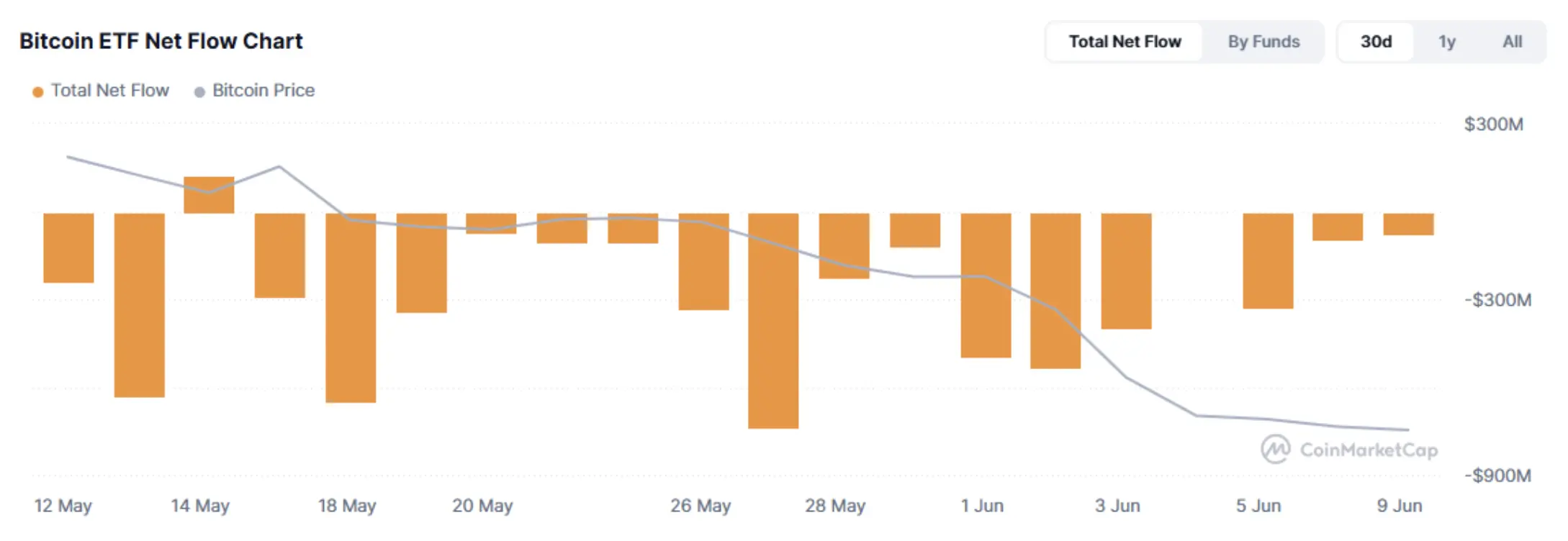
Notably, Standard Chartered argues Bitcoin has nearly done selling off and looks set to bottom out.
The Wall Street bank said Strategy Inc. could soon resume buying, while pointing to resilient spot ETFs as a supportive signal.
That assertion, in our view, looks far-fetched, since ETFs have been reporting net outflows, pushing the price action sharply lower alongside other negative drivers.
Crypto market-maker Wintermute pushes back on Standard Chartered’s take as well. Inflows into the crypto space are still nowhere to be seen.
In our view, this means it is still too soon to call a bottom in BTC, according to the firm.
Wave Structure Leaves Bulls One Last Rebound Scenario
Technically, the Bitcoin bulls still have a fighting chance for a retracement. On this point, we concur with Standard Chartered that the curve may be nearing upside reversal territory.
To remind, a similar setup shaped up back in February, and the current price action appears to be re-enacting that scenario.
From a classical wave analysis perspective, the BTC is trading within its 4th corrective wave. We would rule out this scenario in the event of a break below the $58-60K range.